Customized Spanish lessons for English speakers

Learn about Africa’s Only Spanish-Speaking Nation
When people think of Spanish-speaking countries, they usually think of a couple nations in Latin America and, on occasion, Spain could come up. Nevertheless, there is one country in Africa where Spanish is an official language playing an important role in daily life: Equatorial Guinea.
5/1/20264 min read
Learn about Africa’s Only Spanish-Speaking Nation
When people think of Spanish-speaking countries, they usually think of a couple nations in Latin America and, on occasion, Spain could come up. Nevertheless, there is one country in Africa where Spanish is an official language playing an important role in daily life: Equatorial Guinea.
Geography
Equatorial Guinea is located on the west coast of Central Africa. Despite its name, the Equator doesn’t go across the country. However, it’s fairly close. The nation consists of eight provinces, three of which are found in the Insular region and five of which are in the Continental region. Ciudad de la Paz, its capital city, is located in the center of the country. This has been the official capital city since January 2026. The largest city is the port city of Bata, the former capital city, well-known as a commercial center and nightlife hub
The country shares land borders with Cameroon to the north and Gabon to the east and south. Although Equatorial Guinea is relatively small—covering about 28,000 km² (around 11,000 mi²)— it contains a huge variety of landscapes, including tropical rainforests, volcanic mountains, rivers, and beautiful coastlines.
The climate is generally hot and humid throughout the year. Dense forests cover most of the territory and hold a very rich and stunning wildlife diversity. Because of its tropical environment, the country is home to many species of birds, monkeys, reptiles, and plants.
Population and Languages
Equatorial Guinea has a population of roughly 1.7 to 2 million people. The population is ethnically diverse, with the Fang people forming the largest ethnic group. Other important groups include the Bubi, who are native to Bioko Island, the country 's largest island, and other smaller communities inhabit the country, such as the Ndowe, Annobonese, etc.
For language learners, the most remarkable fact about Equatorial Guinea is that it is the only sovereign country in Africa where Spanish is an official language, being widely used by the population. Spanish serves as the language of education, government, administration, and much of the media. We could call it the lingua franca of the country given its relevance.
Most Equatoguineans speak Spanish to some degree, making the country one of the largest Spanish-speaking populations outside Europe and the Americas. Roughly 85% of the country’s population speaks it fluently. However, Spanish is not the only language spoken there. Indigenous languages remain important in family and community life such as the Fang and Bubi native languages.
The country also recognizes French and Portuguese as official languages. French was adopted partly because neighboring countries are part of the Francophone world, while Portuguese became popular to strengthen ties with Portuguese-speaking nations. Nevertheless, Spanish remains the dominant official language in everyday practice.
For Spanish as a Second Language students, Equatorial Guinea is especially interesting because its variety of Spanish developed separately from those of Spain and Latin America. The pronunciation, accent and vocabulary strongly resemble those of Spain, but local influences from African languages have enriched this specific variety. Although less studied than other Spanish dialects, Equatoguinean Spanish is a valuable part of the global Spanish-speaking community. And of course, it’s still Spanish, so it’s mutually intelligible with other varieties across the globe.
Historical Background
The history of Equatorial Guinea helps explain why Spanish became so important there.
Before European colonization, the territory was inhabited by various African peoples, including the ancestors of today’s Fang and Bubi communities. European contact began in the fifteenth century when Portuguese explorers reached the region. For several centuries, Portugal maintained influence over the islands.
In the late eighteenth century, Portugal transferred control of the territory to Spain through a series of treaties. Over time, Spain established colonial rule over both the islands and the mainland, making room for Spanish missionaries, administrators, and educators to help spread the Spanish language throughout the territory.
During the colonial period, many Equatoguineans learned Spanish through schools and government institutions. Equatorial Guinea gained its independence from Spain in 1968.
Economy and Natural Resources
Despite its small size, Equatorial Guinea possesses significant natural resources. The discovery of large offshore oil reserves in the 1990s transformed the country's economy. For some time, Equatorial Guinea became one of Africa's fastest-growing economies and achieved one of the highest per-capita GDP growths on the continent.
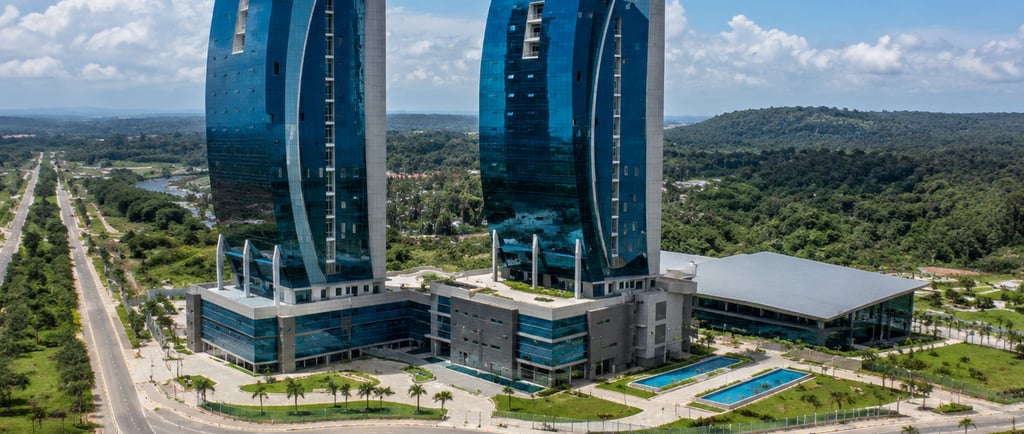
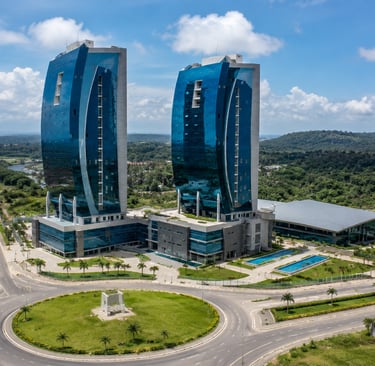
Oil revenues generated great wealth, and modern infrastructure projects appeared in several cities. New roads, government buildings, and urban developments changed parts of the country significantly. The country's main exports include timber, natural gas, oil, diamonds, gold and bauxite.
Political and Social Issues
Any balanced discussion of Equatorial Guinea must acknowledge its political situation.
Many observers have noted that the benefits of oil wealth have not been distributed evenly. That is, economic inequality appears to be a significant issue. Large numbers of citizens continue to face challenges related to employment, healthcare, education, and living standards. As a result, the country's impressive natural wealth has not always translated into broad prosperity.
Moreover, the country has long been criticized by international organizations and human rights groups for restrictions on political freedoms, limited democratic competition, and concerns regarding transparency and corruption. Critics argue that political power has remained concentrated in a single person for many years.
For Spanish learners interested in world affairs, Equatorial Guinea offers an important example of how language, history, politics, and economics can interact in complex ways.
There’s room for optimism
Despite those challenges, there are positive aspects worth mentioning.
Firstly, Equatorial Guinea occupies a unique place in the Spanish-speaking world. It demonstrates that Spanish is not only a European or American language but also an African one. This linguistic diversity enriches the global Hispanic community and broadens our understanding of where Spanish is spoken.
Secondly, the country possesses extraordinary natural beauty. Its tropical forests, volcanic landscapes, islands, stunning beaches and biodiversity offer significant potential for conservation, scientific research, and sustainable tourism in the future.
And thirdly, Equatorial Guinea is a developing country that offers great opportunities for people all around the world to make a living. Many professionals from around the world go to this country to find work opportunities that they have not found in their home countries. The demand for college graduates to fill highly needed positions makes Equatorial Guinea a great place to gain experience and strengthen one’s résumé as well.
For anyone learning Spanish, Equatorial Guinea is a good reminder that the language connects people across multiple continents, cultures, and histories. It is a small country, but one with a distinctive and fascinating role in the Spanish-speaking world.